What an I/O building is, in one sentence
An I/O building is a free-standing or skid-mounted structure that houses the input/output marshalling cabinets, controllers, and motor control centers that connect a process unit's field instrumentation and power loads to its control system. They are sometimes called Local Instrument Rooms (LIRs), Process Interface Buildings (PIBs), or Field Auxiliary Rooms (FARs), but the function is the same.
Why they exist
Process units are large. A modern reactor section can spread over hundreds of feet and contain hundreds of instruments. Running every field signal back to a central control room is expensive in cable, vulnerable to electromagnetic interference, and impractical to maintain.
The I/O building solves this by being close to the field. Cable runs from field instruments to the I/O building are short. From the I/O building, a much smaller number of fiber or trunk cables run back to the main control room. This reduces material cost, improves signal integrity, and makes maintenance manageable.
What's inside
Marshalling cabinets
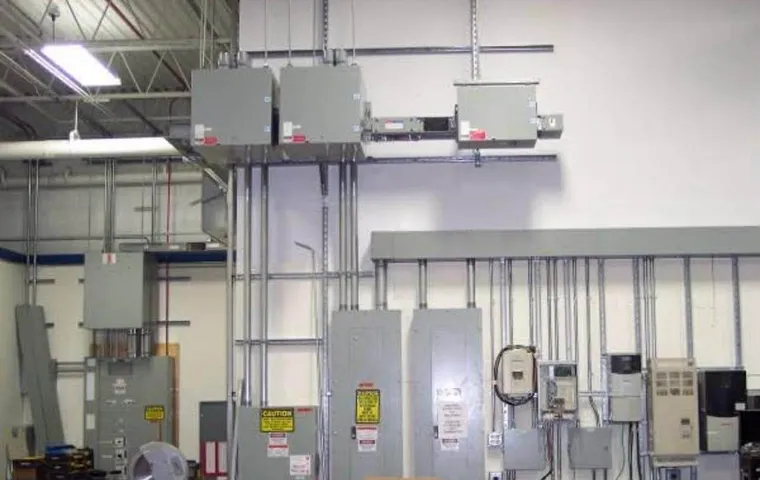
These are the workhorses. Every field cable terminates here on a tagged terminal block. Cables are dressed, labeled, and traceable back to the instrument data sheet. A well-built marshalling cabinet is the difference between a 15-minute loop fault and a 4-hour treasure hunt during a startup.
PLC or DCS I/O cards
The actual input/output cards that read field signals and drive field outputs. These are typically rack-mounted in the I/O building and connected to the marshalling cabinets via dedicated terminal blocks.
Motor Control Centers (MCCs)
If the I/O building serves a process area with motors, the MCC for those motors usually sits inside. This puts the starter, contactor, and overload protection close to the load, which reduces feeder cable runs.
Panelboards and distribution
Lighting and small-power distribution for the surrounding area, instrument power supplies (UPS-backed for safety-critical loops), and the building's own service.
HVAC and pressurization
Air conditioning to keep the electronics within their operating temperature range. In classified areas, the building may be pressurized to keep flammable atmosphere out, with purge controls and high-low pressure interlocks.
What to look for in a build
Cable separation
Power, instrument, and intrinsically safe cables must be separated per NEC, with minimum distances between trays. Mixing them is a code violation and a noise problem.
Grounding scheme
The DCS manufacturer almost always has a specific grounding requirement, often an isolated reference ground separate from the building's safety ground, bonded back at a single point. Skipping this gives you ground loops, signal noise, and intermittent failures during operation.
Cabinet labeling
Every cabinet, terminal block, and cable must be labeled per the site's tagging standard. Generic labels at construction become technical debt for the life of the facility.
Spare capacity
Marshalling cabinets and I/O cards should be sized with spare capacity (often 20%). Adding instruments later is much easier when the cabinet has empty terminal strips waiting.
HVAC redundancy
For critical process units, the I/O building HVAC should have redundant units and high-temperature alarms tied back to the control system. Losing HVAC and not catching it can cook the PLC.
Documentation that should ship with it
- As-built single-line for the building's power.
- MCC bucket schedule with as-installed setting parameters.
- Marshalling cabinet drawings with cable-to-terminal cross-references.
- Megger and ground resistance test records.
- HVAC commissioning records, including pressurization tests for classified-area buildings.
- Lighting and emergency lighting commissioning records.
The bottom line
The I/O building is one of the most overlooked deliverables on a capital project. Get it right and the unit runs cleanly for 30 years. Get it wrong and your operations team will be cursing your contractor for the life of the unit.
If you have an I/O building scope coming up — pre-fab, site-built, retrofit, or replacement — we are happy to walk it down and quote it. Send us the basics and we will respond the same business day.