What a loop check actually is
A loop check is an end-to-end functional test of an instrument loop, verifying the signal path from the field instrument through the marshalling, I/O card, and control system to the operator interface (and vice versa for outputs). The point is to catch wiring errors, range errors, calibration errors, signal scaling errors, and control system configuration errors before the unit is energized for production.
The five things every loop check verifies
1. Signal continuity
Every conductor from the field to the control system is connected to the right terminal, with the right polarity, and the right shielding scheme. A multimeter and a loop calibrator catch this.
2. Field-to-screen scaling
A 4 mA signal at the transmitter should produce 0% on the operator screen. A 20 mA signal should produce 100%. The intermediate scaling (typically at 25%, 50%, 75%) should be linear and within the loop tolerance. Common errors caught here: wrong engineering units configured in the DCS, inverted scaling, span configured at the transmitter that doesn't match the DCS.
3. Alarm and trip thresholds
If the loop has high, high-high, or trip alarms configured, each is exercised. The field signal is brought above the threshold and the alarm response is observed at the operator screen. Trips going to safety system inputs are verified end-to-end.
4. Output response (for control loops)
For loops that drive a control valve, motor, or other field output, the loop check exercises the output: a 4 mA command from the DCS should drive 0% (close) and a 20 mA command should drive 100% (open). The valve position feedback (if instrumented) should match.
5. Response time
For critical loops, the response time from input change to output response is recorded. Slow responses indicate problems with signal filtering, scan rates, or downstream processing.
The procedure
Pre-loop check
- Instrument bench-calibrated and certificate in hand.
- Loop sheet verified against the as-installed wiring.
- I/O card map confirmed with the controls integrator.
- Operator screen tag confirmed.
- Safety system input (if applicable) confirmed with safety integrator.
During the loop check
- Inject signal at the transmitter using a HART communicator or loop calibrator.
- Verify reading at the marshalling terminal block.
- Verify reading at the I/O card.
- Verify reading at the operator screen.
- Exercise alarms and trips.
- Operator sign-off on the loop sheet.
For outputs (control valves, motors)
- Send a command from the DCS.
- Verify the signal arrives at the field device terminals.
- Verify the field device responds (valve strokes, motor jogs).
- Verify feedback signal (if instrumented) makes it back to the operator screen.
- Operator sign-off.
What separates a good loop check from a checkbox exercise
Operator involvement
The loop check is the last opportunity before startup to have a real conversation between the construction team and the operator who will run the unit. Walking the operator through what the loop does, where it alarms, and what they see at high-high is invaluable. The operator finds things the contractor would miss.
Time of day
Loop checks at 2 AM when the contract crew is exhausted are a recipe for missed errors. Schedule loop checks during normal working hours when both the construction team and the operator are fresh.
Order of operations
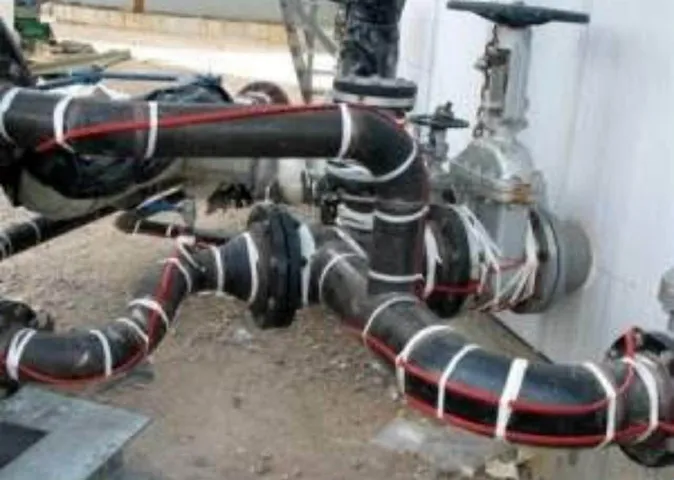
Loop checks should follow installation, not race ahead of it. A loop that fails because the heat trace is not energized, or the freeze protection is not on, gets retested when those items are complete. Tracking what is "checked but pending re-test for environmental reasons" is part of the discipline.
Documentation
The loop check sheet that ships with the project should include for each loop:
- Tag number and description.
- Calibration certificate reference.
- As-installed range vs. design range.
- Result at 0%, 25%, 50%, 75%, 100%.
- Alarm/trip thresholds tested with date and result.
- Output response (for control loops).
- Contractor signature.
- Operator signature.
- Date and time.
Common errors loop checks catch
- Inverted polarity on twisted-shielded pair cables.
- Inverted span in DCS configuration (high = 0%, low = 100%).
- Tag swaps in the marshalling — cable A actually terminates at the position labeled cable B.
- Range mismatches between the transmitter and the DCS scaling.
- Wrong I/O card type — analog input where a digital input was specified.
- Alarm thresholds in wrong engineering units (pressure in psi vs. kPa).
- Failed seal-offs in classified areas, discovered when the loop check shows intermittent signals.
The bottom line
A good loop check is the final line of defense before startup. It is the difference between a unit that starts cleanly and a unit that limps through the first week with the operations team fighting tag errors.
If you have a unit coming up for commissioning and want a loop-check team that does this work routinely, send us the loop sheet list. We will scope it and quote it.